Acoustic Flexible Ducting: A Complete Guide to Quieter, Better-Insulated HVAC Ventilation
Learn how acoustic flexible ducting reduces HVAC noise, improves thermal insulation, and supports quieter ventilation for grow rooms, homes, commercial spaces, and inline fan systems.
Meta description: Learn how acoustic flexible ducting reduces HVAC noise, improves insulation, and supports efficient ventilation in residential, commercial, and grow room applications.
What Is Acoustic Flexible Ducting?
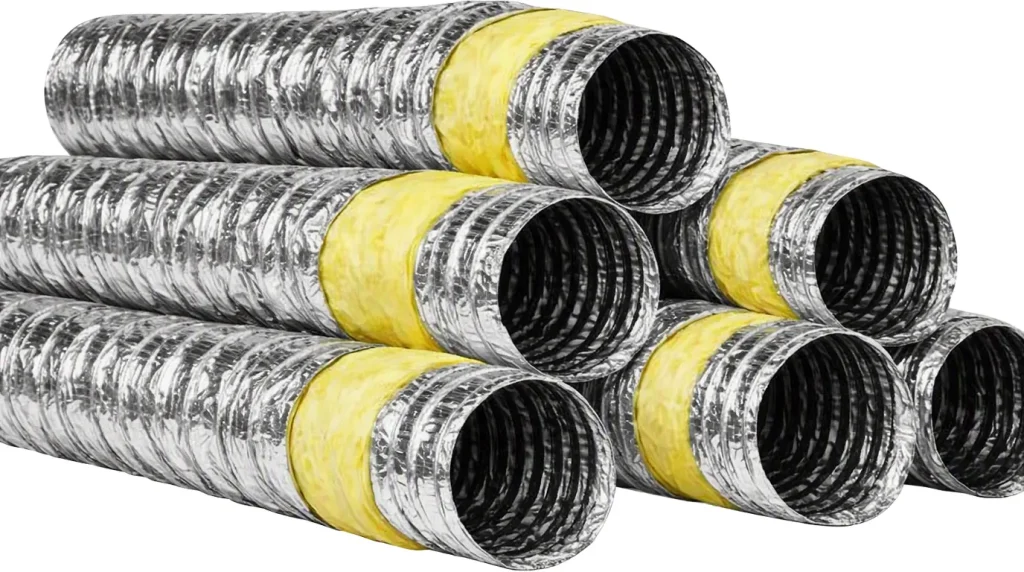
Acoustic flexible ducting is an insulated ventilation duct designed to reduce airflow noise, fan vibration, and temperature loss in HVAC systems. Unlike basic flexible duct hose, an acoustic duct typically uses a perforated inner aluminum core, a sound-absorbing insulation layer, and a protective outer jacket to help create quieter, more efficient air movement.
Noise in ducted ventilation systems is often caused by fast-moving air, inline exhaust fans, turbulence around bends, and vibration transferring through rigid or poorly insulated duct runs. In homes, offices, indoor grow rooms, studios, and commercial HVAC spaces, this noise can become distracting and uncomfortable.
Using sound absorbing insulated ducting helps address the problem directly inside the ventilation path. The duct’s acoustic layer absorbs part of the sound energy before it travels through the system or exits through vents.
Key Benefits of Sound Absorbing Insulated Ducting
Noise reduction: Helps reduce fan noise, airflow hum, and vibration transfer in ventilation systems.
Thermal insulation: Supports better temperature control by reducing heat gain or heat loss through the duct wall.
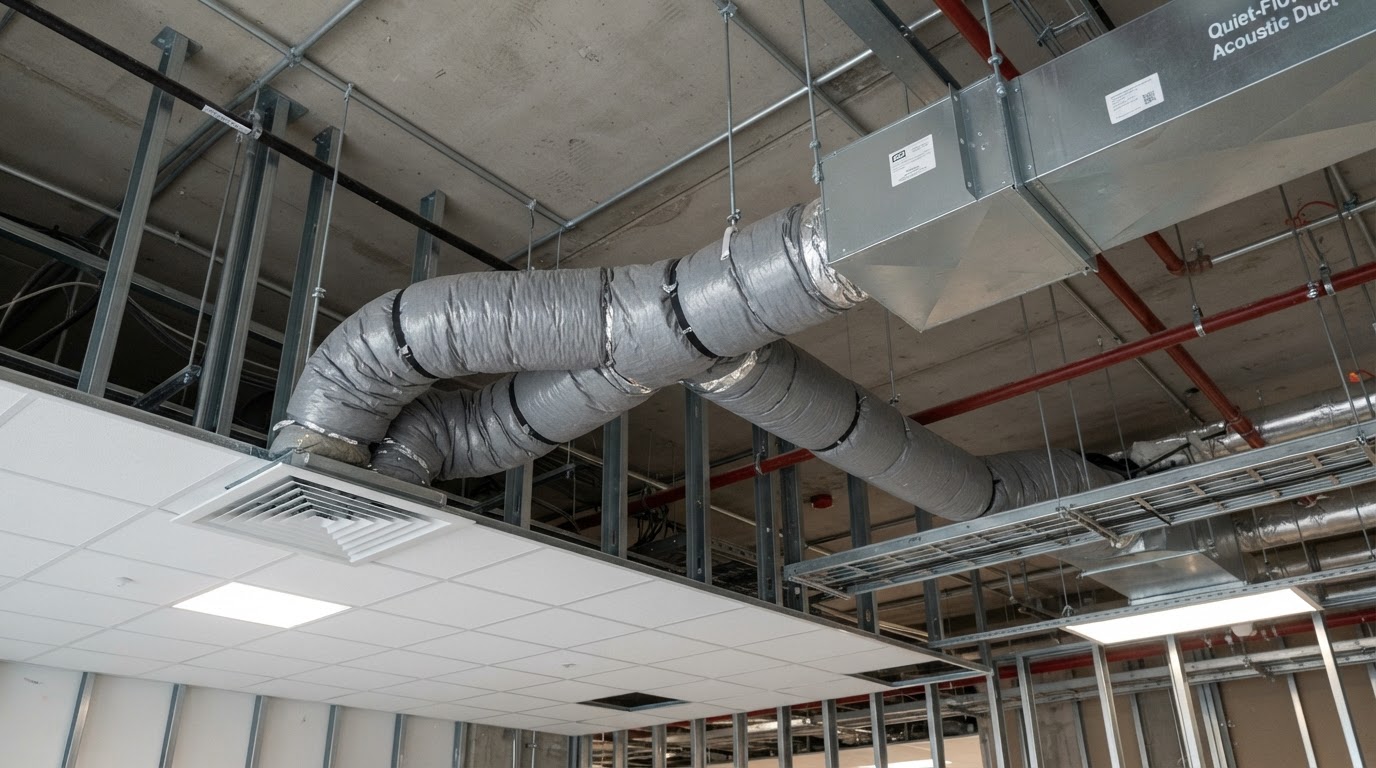
Flexible installation: Bends around corners, ceiling voids, and tight mechanical spaces more easily than rigid ducting.
Improved comfort: Helps create quieter indoor environments in bedrooms, offices, studios, and grow rooms.
Multiple size options: Available in 4, 5, 6, 8, 10, 12, and 14 inch diameters for different airflow requirements.
How Acoustic Flexible Ducting Works
The construction of acoustic flexible ducting is what makes it effective. A micro-perforated inner aluminum core allows sound waves from moving air and fans to pass into the surrounding acoustic insulation layer. The insulation then helps dissipate that sound energy, while the outer aluminum jacket protects the duct and helps maintain an air-tight ventilation run.
Best Applications for Acoustic Flexible Duct
Acoustic insulated ducting is especially useful wherever airflow performance and quiet operation are both important. Common applications include:
Residential HVAC supply and return air runs
Indoor grow room intake and exhaust ventilation
Commercial offices, retail spaces, and quiet zones
Inline fan systems and air filtration setups
Studios, workshops, equipment rooms, and mechanical spaces
Choosing the Right Duct Size
Selecting the correct duct diameter depends on the airflow requirements of the fan or HVAC system. Smaller sizes such as 4 inch and 6 inch are commonly used for compact ventilation, grow tents, and smaller exhaust systems. Larger sizes such as 8, 10, 12, and 14 inch are better suited for higher airflow applications where maintaining air volume and reducing system noise are both priorities.
For best results, match the duct size to the fan outlet, avoid unnecessary bends, and keep duct runs as short and smooth as possible. Proper installation improves both airflow efficiency and acoustic performance.
Installation Tips for Better Noise Reduction
Use the correct duct diameter for the fan or HVAC connection.
Minimize sharp bends to reduce turbulence and pressure loss.
Seal joints securely to prevent air leakage.
Support long duct runs to avoid sagging and airflow restriction.
Install acoustic ducting near noisy fans to reduce sound before it travels through the system.
Why Choose Weltech Acoustic Flexible Ducting?
Weltech’s acoustic flexible ducting is designed for ventilation systems that require a balance of flexibility, durability, insulation, and noise reduction. With multiple diameter options, standard and custom lengths, and OEM supply options, it is a practical solution for contractors, distributors, HVAC installers, and ventilation product suppliers.
If your HVAC or ventilation system is too loud, acoustic flexible ducting is one of the simplest upgrades to consider. By combining sound absorption, thermal insulation, and flexible routing, it helps create quieter, more comfortable spaces while supporting efficient airflow performance.